InvestingPro offers detailed insights into companies’ Cash from Operations including sector benchmarks and competitor analysis. Please note that the above CFO is just for the third month; the cumulative cash flow for the quarter would look like the one shown in the table below. Current assets increased by £2,000 because some patients bought on credit despite not settling not their bills yet. And inventory increased by £1,000, as they purchased new surgical kits and protective equipment.
What Cash Flow from Operating Activities Tells You About Financial Health
- FCFF includes bondholders and stockholders as beneficiaries when considering the money left over for investors.
- The EBITDA to FCFF formula provides an approach to calculate a firm’s free cash flow, directly from its operational profitability.
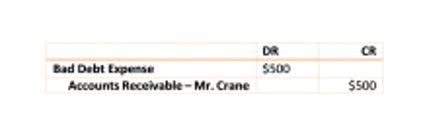
- On the cash flow statement, there would need to be a reduction from net income in the amount of the $500 increase to accounts receivable due to this sale.
- And inventory increased by £1,000, as they purchased new surgical kits and protective equipment.
- The difference between EBITDA and OCF would then reflect how the entity finances its net working capital in the short term.
These are some of the most common and effective strategies to improve cash flow from operations. A company can use a combination of these strategies or other methods to optimize its cash flow from operations. The key is to monitor and analyze the cash flow from operations regularly and make adjustments as needed. By doing so, a company can improve its financial health and performance, and achieve its long-term goals. These are the outflows of cash that the business pays to its suppliers, employees, or other parties for acquiring or using the resources needed to run the business.
Operating Cash Flow vs. Net Income, EBIT, and EBITDA

Unlike accounting profits, which can be influenced by non-cash items, CFO offers a pure view of the cash-generating capability of an investment. This method ensures that all cash flows, regardless of their source, are considered, providing a comprehensive overview of the company’s financial health. There are also QuickBooks Accountant other viable FCFF calculation methods that enable you to get a more nuanced understanding of the cash available to all capital providers. These involve starting from EBITDA, net income, and cash from operations (CFO). This article will show you how to calculate and interpret free cash flow to the firm (FCFF), also known as unlevered free cash flow (UFCF). It’s useful for analyzing past performance, comparing companies, and for valuations, especially for projecting future cash flows in discounted cash flow (DCF) models.
Learn Financial Modeling from A to Z
In other words, FCFF is the leftover cash after a company covers operating expenses and capital expenditures. Cash flow from operations equals the revenue receipts minus the payments made for operating expenses i.e. cost of sales, salaries, taxes, etc. There are cffo formula a range of measures used to determine a company’s net cash flows for valuation purpose, but free cash flow is the most appropriate.

Why is CFO considered more reliable than net income?
EBIT is an unlevered profit measure since it is above the interest expense line and does not include outflows specific to one capital provider group (e.g., lenders). The net income to FCFF calculation returns $49,095M, closely aligning with the NOPAT to FCFF calculation of $50,052M. This proximity is due to Microsoft’s similar NOPAT ($71,723M) and net income ($72,361M) figures, coupled with the company’s minimal interest expense for FY 2023. The claim of debt shareholders can be on $70 of the firm’s capital in the case of liquidation or sale. Current liabilities are all short-term liabilities (term less than 1 year), e.g. payments that the company still has to make to suppliers. You should consult your own professional advisors for advice directly relating to your business or before taking action in relation to any of the content provided.
EBITDA to FCF: Interview Question and Modeling Test Walkthrough
Therefore, it’s important not to take the CFO figure at face value without verifying that non-cash charges are genuinely related to core operations and are recurrent. The Net Income to FCFF formula offers a direct method for converting a firm’s net income into FCFF, providing insight into the cash available to all capital providers after accounting for all expenses, including taxes and interest. Understanding these formulas is important as they offer nuanced insights into a company’s ability to generate cash available to all capital providers. Next, the calculation requires subtracting capital expenditures (CapEx), which are essential for maintaining or expanding the firm’s operations. This step accounts for the cash spent on investments critical to the firm’s sustainability and future growth.
- As from above, we can see that Apple Incorporation in FY15 has generated $81,7 billion as cash from operating activities, of which $53,394 billion has been generated as Net income.
- Cash Flow From Operations provides a measurement of cash inflows and outflows for a specific period of time, usually quarterly or annually.
- Positive (and increasing) cash flow from operating activities indicates that the core business activities of the company are thriving.
- The cash flow from operations is detailed first in the cash flow statement and tells you how much cash flow has been generated by the core operations of the business, as opposed to secondary activities such as investing and financing.
- Note that the calculation of free cash flow can be company-specific, with significant discretionary adjustments made along the way.
For a lender, CFO is critical in determining a property’s ability to service debt, and it’s often a key covenant in loan agreements. By analyzing CFO, real estate investors can make informed decisions about property acquisitions, financing, and management. A robust CFO indicates a property’s ability to generate stable returns, bookkeeping withstand market fluctuations, and provide a cushion for unexpected expenses. It’s a fundamental component of a real estate investor’s analysis, ensuring that investments are not only profitable but also sustainable in the long term. Cash flow from operating activities (a.k.a. CFO, operating cash flow, and net cash from operating activities) is a measure of how much money your company brings in for its typical, ongoing business activities.
FCFF considers all cash inflows in the form of revenues, all cash outflows in the form of ordinary expenses, and all reinvested cash to grow the business. The money left over after conducting all these operations represents a company’s FCFF. However, we should not rely solely on accrual-based accounting, either, and must always have a handle on cash flows. Since accrual accounting depends on management’s judgment and estimates, the income statement is very sensitive to earnings manipulation and shenanigans. Two identical companies can have very different income statements if the two companies make different (often arbitrary) deprecation assumptions, revenue recognition and other assumptions. The main advantage of CFO is that it tells you exactly how much cash a company generated from operating activities during a period of time.

